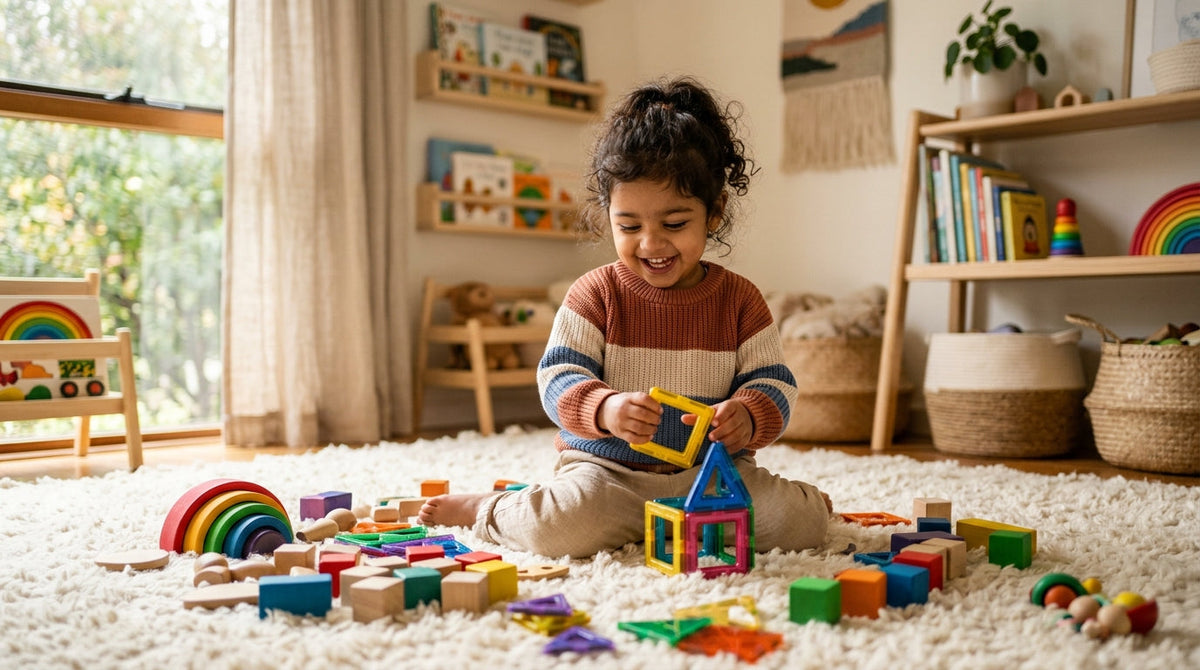
When parents think about preparing a child for school, they often imagine flashcards, alphabet drills, or educational apps. But developmental neuroscientists agree that the single greatest predictor of future academic success, emotional resilience, and lifelong problem-solving isn’t early academic memorization—it is executive function.
Executive function is often described as the brain's internal air traffic control system. It enables children to filter distractions, remember multi-step instructions, control emotional impulses, and adapt when something doesn't go as planned. And unlike screens or scripted electronic toys that do all the thinking for the child, open-ended play is the natural training ground where these mental muscles are built.
The Three Pillars of Executive Function in Toddlers
According to the Center on the Developing Child at Harvard University, executive function is built upon three foundational cognitive capacities:
- Working Memory: The ability to hold and manipulate information over short periods (e.g., planning which block shape to place next to keep a tower balanced).
- Inhibitory Control (Self-Regulation): The capacity to resist impulsive urges, wait for a turn, and maintain focus despite surrounding distractions.
- Cognitive Flexibility: The mental agility to switch gears, test an alternative approach when a structure tumbles, and adjust to changing rules during play.
Why Screens and Single-Trick Toys Fall Short
Modern battery-powered toys and smartphone apps are designed to captivate through rapid dopamine hits: flashing LED lights, loud chime sounds, and automated animations. While they keep a toddler quiet, they require almost zero cognitive planning. The child simply presses a button and becomes a passive spectator.
In contrast, research published in Early Childhood Research Quarterly (Colliver et al., 2022) found that child-directed free play with physical materials directly predicted superior self-regulation and problem-solving skills in preschool years. When a toddler plays with tactile, open-ended materials, there is no pre-programmed script. The child must decide what to build, test spatial hypotheses, and navigate natural frustration when pieces don't fit.
Hands-On Materials That Build Real Focus
Here are four tested, screen-free learning materials designed to engage cognitive planning, fine-motor coordination, and independent problem-solving:

Magnetic Building Blocks Set (64 Pcs)
Rs. 3,030
Open-ended geometric construction that tests spatial balance, trial-and-error, and creative 3D architecture.
View Details →
Blocks Creative Table (Build & Learn)
Rs. 5,160
A dedicated creative building station that fosters hours of independent problem-solving and tidy play.
View Details →
Giraffe Glow Study & Drawing Table
Rs. 2,880
Encourages expressive drawing, fine-motor pencil grip, and sustained visual attention without digital glow.
View Details →
Haunger Funny Hammer Pounding Toy
Rs. 1,990
Direct cause-and-effect physical feedback that releases toddler frustration and refines target hand-eye control.
View Details →Frequently Asked Questions
At what age does executive function begin developing?
Executive function starts developing rapidly between ages 1 and 5. Simple cause-and-effect toys in infancy build the foundation for working memory, while toddler pretend play and sorting develop impulse control and cognitive flexibility.
How do open-ended toys reduce screen-time tantrums?
Screens flood the brain with rapid dopamine spikes, leading to irritability when turned off. Open-ended tactile play engages the child's intrinsic curiosity, producing calm, sustained focus that naturally satisfies their need to explore.
💡 Key Takeaways
- Young children develop foundational executive function and focus through physical, tactile play rather than passive digital screens.
- Open-ended toys encourage independent problem-solving and trigger richer language interactions between toddlers and parents.
- Establishing a predictable 15-minute daily screen-free play routine helps children transition smoothly away from digital devices.
- Brainy Toys delivers certified child-safe learning materials nationwide with hassle-free Cash on Delivery across Pakistan.